
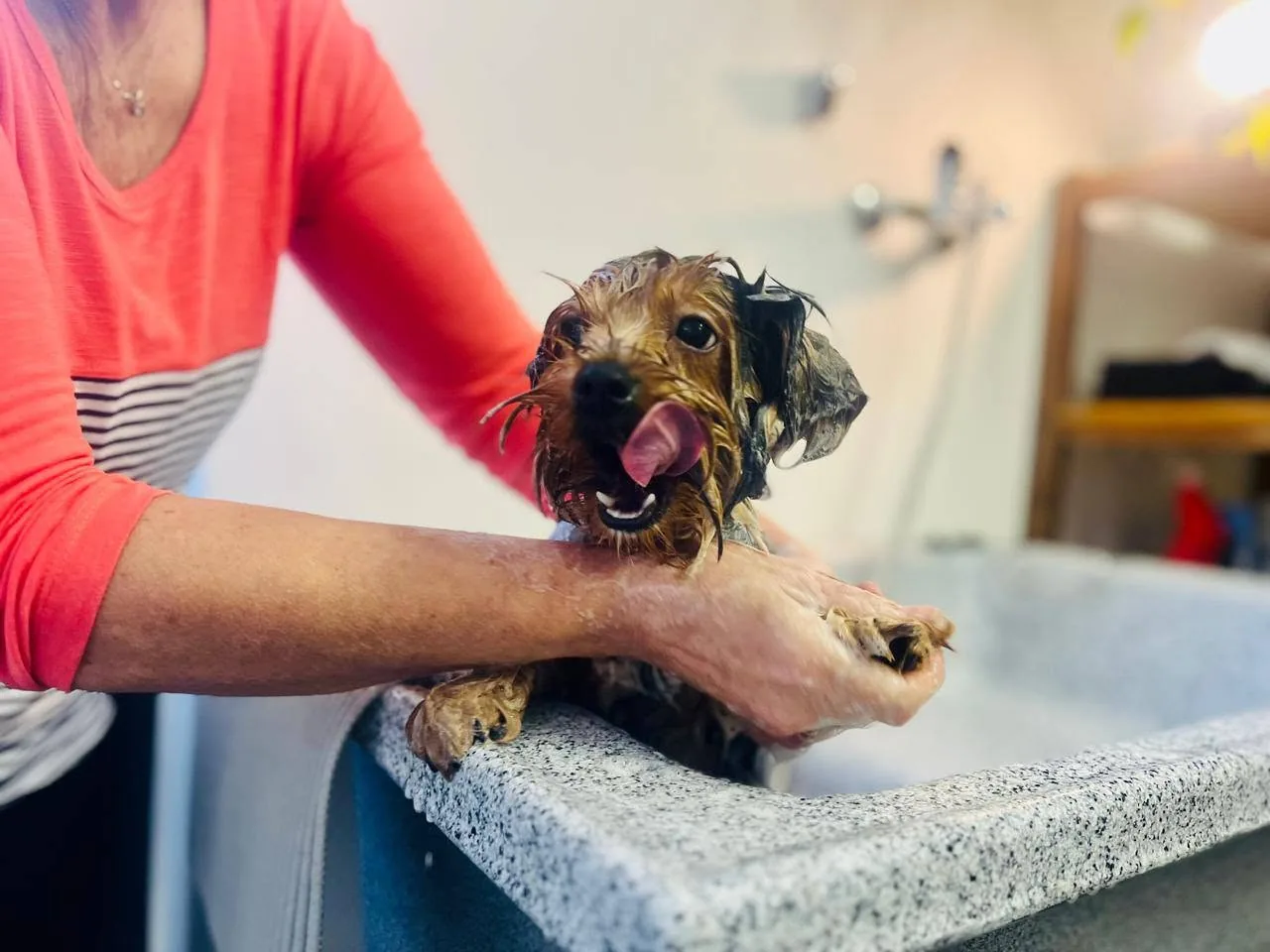
There is no single grooming schedule that works for every dog. A dog’s coat type, coat length, lifestyle, shedding, skin and coat condition, and the amount of home maintenance they receive all affect how often grooming may be needed.
Watch your dog’s coat and comfort rather than relying only on a calendar. Brushing and simple checks at home can show when extra attention is needed, while professional grooming helps keep the coat manageable.
Quick answer: For many adult dogs that need regular professional grooming, every 4–6 weeks is a sensible starting point. Dogs with long, silky or curly coats may need daily brushing, while many short-haired dogs may only need brushing weekly or every few weeks. Healthy non-shedding dogs are often bathed around every 6–8 weeks, while most dogs need their nails trimmed approximately every 3–4 weeks. Your dog’s breed, coat, lifestyle, skin health and home grooming routine can make these intervals shorter or longer.
A Practical Dog Grooming Schedule
- Professional full groom: For many adult dogs that need regular professional grooming, clipping or coat maintenance, every 4–6 weeks is a useful starting point.
- Long, silky or curly coats: Brush daily to help prevent tangles and matting.
- Short-haired coats: Brush about once a week to every few weeks, depending on shedding and the individual coat.
- Bathing: Healthy non-shedding dogs may commonly need a bath around every 6–8 weeks, but bathing frequency varies greatly with coat type, activity, dirt and skin health.
- Nail trimming: About every 3–4 weeks for most dogs, although natural wear and individual nail growth can change this.
- Ear checks: Check roughly weekly as a practical habit.
- Ear cleaning: Cleaning frequency varies. Some healthy ears need little or no routine cleaning, and over-cleaning can cause irritation. Unusual smell, discharge, redness or irritation should be assessed by a veterinarian.
What Determines How Often Your Dog Needs Grooming?
Coat type, length and texture matter. Long or curly coats can hold loose hair, moisture and dirt, and tangle more easily. Shorter coats are often simpler but still need brushing, bathing when needed and routine checks.
Double-coated dogs may shed more heavily at certain times. Two dogs of the same breed can have different coats, activity levels and grooming needs.
Lifestyle matters too. Outdoor, muddy or swimming dogs may need attention sooner. Age, mobility, temperament and coat condition can also affect whether grooming is manageable at home or needs professional help.
How Often Should You Brush Your Dog?
Long, silky or curly coats may require daily brushing to help prevent tangles and matting. Short-haired dogs may often be brushed weekly or every few weeks, while heavy shedding periods may require more frequent brushing. Inspect the coat and adjust the routine when you notice loose hair, knots, trapped dirt or a change in how easily the brush moves through the hair.
Pay particular attention to areas behind the ears, under the legs, around the collar and anywhere the coat rubs together. These places can tangle sooner. Gentle, regular brushing is usually more comfortable than waiting until a large knot forms.
If your dog dislikes brushing, begin with short, calm sessions and gradually build up as they become more comfortable. A patient routine can make coat care easier while helping you notice changes in the coat.
How Often Should You Bathe Your Dog?
Healthy non-shedding dogs are often bathed around every 6–8 weeks, but other coats may need different schedules. Muddy walks, swimming or a dirty coat may mean a bath sooner, while dogs with skin conditions should follow veterinary guidance.
Bathing too often can contribute to dryness by removing some of the coat’s natural oils. Use dog-specific products, rinse thoroughly and speak with a veterinarian about ongoing itching, irritation, unusual smell or another concern rather than trying to solve a possible health problem through bathing alone.
Drying matters too. A damp, thick or long coat can be uncomfortable and harder to maintain, so use the gentlest approach for your dog’s coat and temperament.
What About Nail Trimming and Ear Cleaning?
Grooming is broader than coat care. Most dogs need nail trimming approximately every 3–4 weeks. Frequent walking on hard surfaces can wear nails down naturally, while some dogs need more frequent trims. Visible length or clicking on hard floors can indicate nails are too long.
Check ears roughly weekly. Cleaning frequency varies: some healthy ears need little or no routine cleaning, and over-cleaning can irritate the ear canal. Smell, discharge, redness or irritation should be assessed by a veterinarian.
Depending on your dog’s needs, Fairy Dogmother can discuss practical grooming services such as nail trimming and ear cleaning as part of a calm, individual appointment.
Signs Your Dog May Need Grooming Sooner
Your dog may need grooming sooner than expected if you notice:
- tangles or matting
- a visibly dirty coat
- an unpleasant smell
- nails that are becoming long
- increased shedding that is difficult to manage
- a coat that is becoming difficult to brush or maintain
These signs do not always point to a grooming issue alone. Changes in smell, coat, skin or behaviour can have different causes, so seek veterinary advice when something seems unusual or persistent.
Home Grooming and Professional Grooming Work Together
Home care and professional grooming support each other. Brushing, coat checks and gentle handling help you understand your dog’s normal condition, while professional grooming provides bathing, drying, trimming and styling that may be difficult at home.
For many adult dogs that need routine clipping, coat maintenance or full professional grooming, an appointment every 4–6 weeks is a practical starting point. Some short-coated or lower-maintenance dogs may need professional grooming less often, while fast-growing, curly or easily matted coats may benefit from more frequent care.
The aim is a manageable routine for that individual dog. Sharing coat type, lifestyle and concerns helps a groomer recommend an appropriate approach.
Dog Grooming in Wellington and Paarl
Fairy Dogmother offers personal dog grooming for families in Wellington, Paarl and surrounding areas. Services may include bathing and blow dry, ear cleaning, full-service grooming, grooming and styling, and nail trimming, with each appointment discussed around the dog’s individual needs.
If you are unsure what kind of grooming your dog needs, visit the dog grooming services section for an overview, then share your dog’s details, coat type and preferred timing. Every dog is different, so a direct conversation is the best place to start.
Frequently Asked Questions
How often should a dog be professionally groomed?
For many adult dogs requiring routine professional grooming, every 4–6 weeks is a useful starting point, but coat type, style, lifestyle and home maintenance can change the interval.
How often should I bathe my dog?
Healthy non-shedding dogs are often bathed around every 6–8 weeks, but other dogs may need bathing sooner or less often depending on coat, activity and skin health.
Can you bathe a dog too often?
Yes. Bathing too often can contribute to dryness by removing natural oils. Use dog-specific products and ask a veterinarian about ongoing skin or coat concerns.
Do short-haired dogs still need grooming?
Yes. Short-haired dogs may often need brushing weekly or every few weeks, while nail checks, bathing and other grooming needs still vary individually.